Editorial owner: Kier Lee Zamora · Editorial policy
Conversation Practice Partners: Human Exchange or AI?
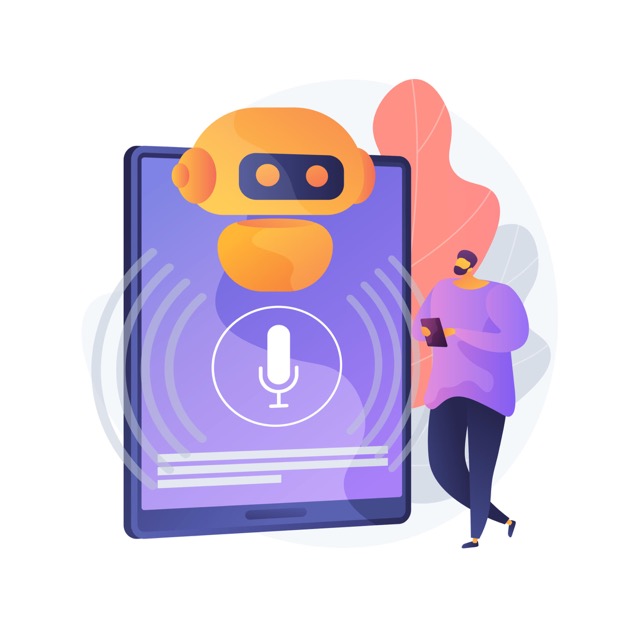
The best conversation partner depends on what you need to practise. A human exchange partner offers genuine social interaction and unpredictable conversation. An AI partner can offer repeatable scenarios and practice on demand; privacy depends on the service's data handling and retention policies. These options are not competitors in every situation; many learners progress faster by using each for the job it handles well. For a step-by-step treatment of that skill, continue with how to work with a language-exchange partner.
Choose a partner based on the practice goal
- Use AI for repetition, role-play, targeted prompts, and low-pressure warm-ups.
- Use a human partner for turn-taking, relationship building, and exposure to personal speaking habits.
- Use a tutor when you need expert diagnosis or preparation for a high-stakes goal.
- After every session, record one difficulty and make it the focus of the next one.
What each type of partner can and cannot provide
A human exchange partner reacts as a person with their own knowledge, patience, humor, and conversational habits. That makes the exchange socially meaningful but also variable. Partners are not automatically trained teachers, and one person's wording or cultural judgment is not a universal rule. Use the guide to working with a language-exchange partner to agree on time and correction.
An AI partner is software, not a native speaker or cultural representative. Its advantages are availability, repeatability, configurable scenarios, and the absence of social pressure. Its answers and corrections can still be wrong. Avoid sharing sensitive information, verify important claims, and use human feedback when tone, culture, or high-stakes accuracy matters.
Use a partner ladder
For a difficult situation, begin by rehearsing alone, then repeat with AI, then try it with a supportive human, and finally use it in the real setting. Each step removes some control. A job-interview answer, for example, moves from a recording to AI follow-up questions, tutor feedback, and an unscripted mock interview.
Keep the task and evaluation consistent across the ladder. Track whether you understood the question, answered directly, developed the idea, repaired gaps, and remained intelligible. The 15-minute daily routine provides a compact way to rehearse between human sessions.
Combine partners instead of declaring a winner
Use AI for volume and controlled repetition; use exchange for reciprocal conversation; use a tutor for expert diagnosis; and use real situations to test transfer. A learner may need only one of these at a particular stage. The question is which missing condition—frequency, realism, feedback, expertise, or confidence—is currently limiting progress.
The Council of Europe’s CEFR Companion Volume describes interaction and mediation alongside individual production. Those distinctions are useful when choosing a partner: repeating a presentation, negotiating shared meaning, and explaining information for someone else are different tasks.
After two weeks, review the evidence. If AI practice is fluent but human conversation still breaks down, add less predictable human interaction. If human sessions are friendly but corrections never transfer, add focused repetition between meetings. If both reveal the same persistent problem, seek a tutor or targeted reference rather than simply increasing conversation time. The plateau diagnostic can help isolate that problem.